Sunday, July 25, 2010

One for The History Books

Anyone who reads this blog may have noticed that I have not updated in quit a long time.  The reason for that is because I have been studying for the California Bar Exam.  However, the test is next week, I feel as prepared as I possibly can be, and last week I had the opportunity to watch one of the greatest baseball games I have ever seen in my life.  Thus, my decision to update.


Baseball's Greatest Rivalry

There are many rivalries in sports.  When people think of baseball I am sure the majority of fans think about the Yankees and Red Sox and their rivalry.  That rivalry certainly gets the most attention in the press, and those two teams are the two most popular teams, so of course their rivalry is going to be romanticized.  However, it truly does not capture the intensity, the history, and the pedigree that the Dodgers-Giants rivalry has.

The Giants and Dodgers are two of baseball's oldest teams.  Their hatred for each other began while the two teams broke ground as two of the premiere teams in New York and Brooklyn, respectively.  The Giants represented the wealth and class of big city New York, while the Dodgers represented the knock-hard working class Brooklyn.  The cultural rivalry that was represented each time the two teams met on the diamond endured across an entire continent, when the Dodgers moved to Los Angeles and the Giants moved to San Francisco: two cities which have always fought and struggled with another to be the beacon of the American West.

Unlike the Yankees-Red Sox rivalry, which has been historically one-sided, the Dodgers-Giants rivalry is uncannily even insofar as the success of the two franchises is concerned.  The Giants have beaten the Dodgers 1164 times, while the Dodgers have won 1147 times.  Additionally, the Dodgers have 22 pennants while the Giants have 20; the Dodgers have 6 World Series titles, while the Giants have 5.  Indeed, the rivalry between these two teams has always been fresh and intense, due to the fact the two teams always have something to prove to another.

The rivalry, being the longest in sports' history, has may great moments.  The Shot Heard Round the World, is perhaps the greatest moment in the history of call sports.  Juan Marichal's viscous attack on Johnny Rosboro with a bat remains the most viscous episode of violence in the history of professional baseball.  Brian Johnson's 12th-inning homerun agains the Dodgers in 1997, which sent the Giants into the post-season, remains one of the greatest homeruns in Giants' history.

A New Chapter

And now, the Giants and Dodgers have yet another game to add to the long list of epic moments the often results when these two franchises meet.  On July 20, 2010 the Giants and Dodgers met at Chavez Ravine to play game 2 of their three-game series.  The Giants had not fared well against the Dodgers at all this year.  Going into the series the Dodgers had beaten the Giants 5 times, including a sweep at AT&T Park, while the Giants had beaten the Dodgers once.  The Giants were able to beat their rivals on July 19, 2010, and going into game 2 it seemed like the Giants would be able to win their first series against their rivals, as Tim Lincecum was taking the mound against Clayton Kershaw.

Also on the minds of many Giants fans was when the Giants were going to get revenge.  Earlier in the season, Dodger starting-pitcher Vicente Padilla threw a ball that hit Aaron Rowand in the face, fracturing the Giants' center fielder's cheek bone; an injury that would sideline him for several weeks.  Many of us anticipated the Giants would retaliate when the Dodgers came to San Francisco, but nothing happened and it seemed that Rowand's injury would be forgotten.

The game began immediately with the Dodgers drilling Giants' lead-off man, Andres Torres.  Again, Giants fans wondered when the retaliation would come.  It appeared that the Dodgers were going to continue to bully our players and no one on our staff would get revenge.  As a blood thirsty fan you want to see blood whenever a Dodger pitcher hits a Giants batter.  However, to make matters worse,  Lincecum did not have his stuff going for him.  He threw some pitches randomly into the air, he could barely hit the strike-zone, and before he was taken out in the fifth inning he had given up five runs.

In the fifth-inning however, with the Giants down 5 to 1, the tensions would escalate.  With Matt Kemp at the plate, on the 1-0 pitch, Lincecum threw a ball high and inside, which brushed Kemp back, knocking him to the ground.  Boos echoed throughout Dodger Stadium as Kemp stood up and resumed his stance in the box.  With the next pitch, Lincecum threw at Kemp again, hitting the Dodger-slugger in the back.  Kemp marched out in front of the plate and watching the game you wondered if he would charge the mound.  Lincecum, for his part, stepped off the mound and turned his back to Kemp as the Dodger fumed and marched to first base.  Pablo Sandoval rushed forward and stood between Kemp and Lincecum.  The tension subsided and the game went on.

The drama would return however.  Pablo Sandoval hit a three-run double in the 6th inning that brought the game to 5-4.  With Aaron Rowand at the plate in the 7th, Dodger pitcher Clayton Kershaw threw a ball right at Rowand, hitting him in the leg.  Due to the fact that Kershaw had been warned about retaliation, he was ejected along with manager Joe Torre.  The game went out without any more immediate drama.

In the bottom of the ninth, the Giants managed to get a man on second and third.  Jonathan Broxton, the elite closer for the Dodgers, came on to close out the game and to protect the slim 5-4 lead Los Angeles had.  After Broxton came on he walked the first batter he saw to load the bases.  After that perhaps one of the weirdest rules lawyering happened that I have ever seen in baseball would end up helping the Giants mount one of the most epic comebacks in recent history.

Mattingly, the Dodgers coach after Torre and their second in command had been ejected, came out to talk with the Dodgers and Broxton.  The men huddled on the field and discussed strategy for a moment.  After a short time they broke.  Mattingly stepped off the mound and onto the grass.  As he did so, James Loney, first baseman for the Dodgers, asked a question.  Mattingly spun around and stepped back onto the mound in order to answer.

Renteria scores the winning run.
Suddenly, with a fire in his step you rarely see, Bruce Bochy came thundering out of the Giants dugout.  Bochy bee-lined straight for the umpires and starting complaining about something.  No one watching the game knew what was going on.  The Dodgers didn't know what was going on.  The Giants didn't know what was going on.  The Dodger-fans never know what's going on.  Certainly none of the umpires knew what was going on.  However, an obscure rule would come into play, which would turn the Giants' fortunes for the better.

Rule 8.06 of Baseball limits the amount of mound visits a coach can make during the same batter.  Subsection (b) holds that "a second trip to the same pitcher in the same inning will cause [the] pitcher's removal."  Lastly, subsection (d) holds that "a manager or coach is considered to have concluded his visit to the mound when he leaves the 18-foot circles surrounding the pitcher's rubber."

After a short argument, Jonathan Broxton, the elite-closer for the Dodgers was taken out of the game.  In to replace him was George Sherrill, one of the biggest disappointments in major league baseball this year.  After just two pitches, Andres Torres hit a shot into left-center, which scored two runs and gave the Giants the lead, and after a shut down from Brian Wilson, the Giants were able to steal away a game from the Dodgers and stun them.  It was one of those moments that harken back to the glory days of baseball.  It was one of those moments that fired up an entire fanbase and let us all know that the 2010 Giants have a fire in their hearts and are going to try their hardest to go deep this year.

A Rivalry Renewed?

During the Bonds years there was a fervor in the Giants-Dodgers rivalry.  Dodgers fans hated Barry Bonds.  He was the best player in the game and he played for their hated enemy.  Giants fans loved to see Barry beat LA.  Since Bonds left, however, the rivalry, at least from the perspective in San Francisco, lost a little of its pop.  The Giants were hardly competitive through 2007 and 2008, thus the rivalry lost a little of its fun.  Moreover, for all the hatred that existed between the fans of these two franchises, you always had to wonder where the hatred was between the players, if it existed at all.

Beat LA.
I always wanted the players on my team to hate the players on the Dodgers.   I never wanted to see them get chummy at first base.  I never wanted to see them laughing and making jokes with each other.  I never wanted to see them tell the media how good of a team the other was.  No.  I didn't want them to friend.  I wanted Juan Marichal beating the crap out of a blueberry with a baseball bat.  That's baseball.  That's Giants-Dodgers.

With modernity, a lot of these rivalries fizzled out on the field.  In the early days of baseball many of the players on major league teams were actually from the cities they played in.  They often grew up rooting for the teams they played for.  And many of them lived within blocks of the stadiums where they worked each day.  Thus, players of yesteryear understood how the fans felt.  They understood what it was like to hate the Dodgers or hate the Giants.  Because they grew up being in the same place as the fans had been.

Now, however, with baseball being an extremely professional and sophisticated business, most players do not play for the team they grew up rooting for.  In fact, several Giants players today, such as Sergio Romo and Barry Zito, actually grew up rooting for the Dodgers.  Thus, much of the hatred for the Dodgers, which is so personal for fans, is simply not there for the players.

Suck it Russel Martin.
I feel that has changed with this past series in Los Angeles.  Over the past two years several incidents have occurred which I believe has led to some serious bad blood that now has become personal between players on the Giants and Dodgers, which has seemingly recurred on the field several times.  One such incident was last year when Casey Blake mocked Brian Wilson from the dugout in Los Angeles by copying the gesture Wilson makes in remembrance of his father.  To Blake's credit, he didn't know what Wilson's gesture meant, but even after he found out what it meant he refused to apologize.

In 2009, the Giants and Dodgers cleared the benches at AT&T park after Pablo Sandoval and Russel Martin got into an argument at the plate.  No punches were thrown but it looked like something serious was brewing.  This year, Aaron Rowand has been thrown at twice.  Matt Kemp has been hit.  Andres Torres has been hit.  Russel Martin got a brush-back.  And after 20 July, the Dodgers suffered one of their most humiliating losses in years.

There is no telling if further retaliation will come.  However, coming this week the Dodgers will return to AT&T Park.  Let's hope another chapter in the rivalry will be written.

Friday, April 30, 2010

Antitrust and Competitive Balance

Competitive balance is a hot topic for baseball fans these days.  After the Yankees won their 27th World Series on a gargantuan payroll that was leaps and bounds ahead of any other team in the league, the grumblings around the baseball community about the need to address balance issues in MLB were renewed.  Indeed, without a doubt baseball does have a balance issue.  "From 1980 to 1986, twenty of baseball's twenty-six teams made it to a League Championship Series (LCS).  From 1995 through 2001, only eleven of baseball's thirty made it to an LCS." (Zimbalist, May The Best Team Win (2003) p. 43.)  Moreover, of the eleven teams that did make it to an LCS during the 1995-2001 period, none won a World Series who were outside the top fourth in payrolls. (Id. at p. 43.)  Clearly there is something wrong with baseball.  A myriad of solutions have been suggested: salary caps, salary floors, more revenue sharing, and realignment have been the most common solutions debated in the media.

There is one thing, however, that I never hear discussed.  Baseball's archaic antitrust exception.  Baseball's antitrust exception has allowed the league to create a system which lends itself to balance issues throughout the lead.  With its antitrust exception, baseball has created a flawed minor league system which may be a chief contributor to baseball's balance issues.  In this essay I will detail the history of baseball's antitrust exception, what it means, and why it still matters for baseball today.

What Is Antitrust?
Antitrust law is the federal government's attempt to stop business concentration and economic power. (E. Thomas Sullivan et al., Antitrust Law, Police And Procedure: Cases, Materials, Problems (6th Ed. 2009) p. 1.)  Antitrust law is designed to prevent economic power from being concentrated in too few hands (avoid monopoly).  It is also designed to stop unreasonable restraints on trade, including inter alia: price fixing agreements (where competitors agree to charge higher prices than they would if they competed), market allocation (where competitors to agree not to compete in certain geogrpahical areas), and attempts to monopolize.  Antitrust laws prohibit more than just the aforementioned conduct, however those actions are the most commonly seen.

Since antitrust law is federal legislation enacted by Congress, it can only reach activity that is interstate, as per Congress's commerce clause power.  This is important because what exactly is interstate commerce is not the same today as it was when baseball first was granted its antitrust exception. 

Baseball's Antitrust History
In order to understand baseball's current antitrust exception one must delve into the history of MLB.  MLB was formed in 1903 with the merge of the American and National Leagues. (Zimablist, May The Best Team Win, supra, at p. 15.)  While the leagues were once competitors, the owners of the respective leagues determined it would be economically viable for them not to compete with each other.  Pursuant to their collusion, the owners of the newly formed MLB could create labor policies that players were helpless to combat: with the two major leagues now combined into one league, players could no longer vote with their feet and move to a different league that offered better playing conditions.  The policy that was the most unbearable for players was the dreaded reserve clause.  The reserve clause forbade players from seeking free agency; players could only be moved if an owner wanted to sell that player to another team.  In a sense, this was 20th century indentured servitude.  Players hated the reserve clause, but all attempts to rid baseball of this arcane labor requirement failed.

Seeing a class of disgruntled players ripe for the picking, a new baseball league was formed in 1913.  The Federal League was originally formed as a minor league, but quickly announced that it would become a major league and began to court MLB players by promising players long-term contracts and abandoning the reserve clause.  (Id. at p. 15.)  The floodgates opening, and a army of disgruntled MLB players jumped ship for the FL.  Between 1914 and 1915, 221 major league players joined the FL.  (Id. at p. 15.) 

MLB was not about to take this betrayal sitting down.  MLB quickly blacklisted any players who went to the FL and sued many of the defectors.  (Id. at p.16.)  The FL responded by suing MLB, claiming MLB's attempt to block players from joining the FL was an unreasonable restraint of trade, an antitrust violation.

The case went all the way to the Supreme Court of the United States.  The argument in the Federal Baseball case was whether federal antitrust laws reached baseball.  Was baseball "interstate commerce"?  Ultimately, the Supreme Court found that it was not interstate commerce and ruled baseball was exempt from antitrust laws.  In an opinion by Oliver Wendell Holmes, baseball games were "purely state affairs" that did not effect interstate commerce, because the travel across state lines each team did to play in a rival city was merely incidnetal to the game, but it was not an essential element of baseball. (Id. at p. 17.)  Thus, the FL had no ability to prevent MLB's anticompetitive behavior.  Within several years the FL folded. 

While it may seem odd to us today, the decision was not necessarily wrong at the time.  Prevailing views of what constituted interstate commerce were extremely different in 1922, when the case was heard.  It was not until the 1930s and 1940s that our modern idea of what constitutes interstate commerce began to take shape. The decision in Wickard v. Filburn (1942) 317 U.S. 111 noted that Congress has the power to regulate any activity, local or interstate, that either in itself or in combination with other activities has a substantial economic effect upon or effect on movement in interstate commerce.   This decision greatly broadened the power of the commerce clause, as now federal laws could reach activity that was entirely intrastate if that activity, in the aggregate, would or could have an effect on interstate commerce.  Clearly, after Wickard, baseball fell into that class of activity.

However, the battle over baseball's antitrust exemption did not end there.  Following World War II, a new baseball league was formed.  The new Mexican League offered players handsome salaries, especially for young players looking for an initial club to sign with.  One such player, Danny Gardella, signed with the ML after getting a handsome offer (coincidentally, the MLB he snubbed was the Giants).  (Id. at pp. 17-18.)  Gardella began playing in Mexico, but found the playing conditions simply unbearable.  He walked away from the league and sought return to the MLB, however for his defection to the ML, he was now blacklisted.  Gardella sued MLB, claiming that baseball's antitrust laws no longer applied given the advancement of commerce clause jurisprudence and that the advent of radio and television had changed the nature of baseball so drastically that it certainly constituted interstate commerce. (Id. at p. 18.)  Lower circuit courts ruled for Gardella and awarded him damages of $300,000.  MLB attempted to take the case to the Supreme Court, however before the Court could hear the case it was settled.  Thus, there remained ambiguity about baseball's antitrust exemption: a federal circuit court had seemingly struck down the exemption, however the Supreme Court never got the chance to have the final word.

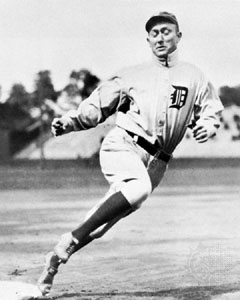
The battle continued.  In the 1950s, Congress held hearings, not unlike the ones following the steroid scandal in the 21st century.  Aftering hearing from many ballplayers, including Ty Cobb, who argued that the reserve clause was required in order for baseball to stay competitive, Congress declined to remove the antitrust exemption as it applied to baseball (Zimbalist 18).

The Supreme Court, bizarrely, confirmed baseball's antitrust in yet another decision in 1953.  George Toolson sued MLB after he was to be traded from the Yankees.  Toolson refused to report to duty when the Yankees informed him they were moving him.  The Supreme Court claimed that baseball had an antitrust exemption for two reasons: (1) we already ruled that baseball has an antitrust exemption (even if it no longer makes sense); (2) Congress held hearing and decided not to remove the exemption.  This seems like a bizarre excuse from the high court.  They felt they did not need to act because Congress did not decide to remove the baseball exemption that Congress never gave them in the first place?  Baseball's antitrust exemption was a judicial monster, not a congressional one.  Should not the solution come from the judiciary?  What made this case so frustrating, is just several years later in Radovich v. NFL, the Supreme Court ruled that the National Football League did not have an exemption from baseball.  (Id. at p. 20.) 

Finally, the Flood case would begin the death knell of the reserve clause, which remained to be hated by major leaguers throughout baseball.  Curt Flood was one of the best center fielders in the game in the late 1960s and early 1970s.  When he was traded from the St. Louis Cardinals he objected.  He wrote to the baseball commissioner and requested that he not be traded; the request was denied.  Following this, Flood sued MLB, claiming that the reserve clause was an unreasonable restraint on trade.  The Supreme Court eventually heard the case, and in a decision by Justice Blackmun the Court noted that baseball's antitrust excemption was an "aberration."  The Court refused, however, to remove baseball's exemption, alleging that the rule had stood for so long, and so many people had many important business or life decisions on baseball's exemption.  Justice Blackmun also noted that the decision was a "reconition of baseball's unique characteristics and needs."  Oddly enough, Blackmun failed to explain exactly what made baseball so unique from football.  (Id. at pp. 20-21.)

Fortunately for Mr. Flood, however, while the antitrust exemption survived, the reserve clause did not.  In 1975, MLB agreed to abandon the reserve clause and in 1976 the free agency system began. 

So where do we stand now?  Today there is still ambiguity over whether baseball has an antitrust exemption.  Most of the litigation surrounding the exemption addresses the reserve clause.  Some pundits have talent his to mean that the exemption only reaches the reserve clause, and seeing now that the reserve clause is dead, the exemption means nothing.  MLB has been very good at avoiding litigation it believes will destroy its antitrust exemption.  As it stands now, baseball has a broad antitrust exemption in most legal circles; at least until there is cause for the Supreme Court or Congress to clarify exeactly what the exemption reaches today.  Regardless, the presumed exemption has effects on the modern game.

What The Antitrust Exception Means
There are several practical effects the antitrust exception still has on baseball.  Traditionally, as I hope has been made clear, most litigation surrounded the reserve clause.  Despite the fact that the reserve clause is a thing of the past, the minor leagues are still greatly effected by the antitrust exception.

Minor Leagues and Antitrust
Baseball is unique in professional American sports in that it grows players in a unique minor league system.  How does this system work?  Every June MLB holds a draft.  Unlike the NFL draft, where teams get together to draft NFL-ready players out of college, the MLB draft is for high school and college players from the US, Canada, and Puerto Rico.  Players are chosen by a particular team.  "Once chosen, players can either sign with the selecting team with a fixed salary . . . plus a signing bonus for the top prospects, or they can stay out of professional baseball until the next year's draft.  Chosen players who sign witha major league team then spend up to four years in that club's minor league system before another team has an opportunity to sign them."  (Id. at p. 25.)  If a minor league player is put on a team's 40 man roster, then he cannot be picked up by another team for seven years.

As I noted above, antitrust laws prohibit unreasonable restraints on trade.  Generally, a restraint the artificially fixes prices or prohibits competition will be unreasonable.  In the case of minor league players, this is clearly an unreasonable restraint of trade.  Why?  First, because players are not allowed receive competitive bids for their services after they are drafted.  Their pay rate is set by the owners and does not reflect his own skill.  Imagine you have a business making pizza.  Your pizza is the greatest pizza in town, but the city has put some restrictions on you: (1) you can't raise your price; (2) you can't move to a more profitable block.  These are unreasonable restraints on trade and it is what goes on with baseball players in the minor leagues.  Furthermore, minor league players are not, and cannot, be unionized.  They cannot partake in collective bargaining.  All htese are unreasonable restraints on trade and the only reason they are legal is because baseball has an antitrust exemption.

What would happen if the antitrust exemption were lifted?  Baseball competitive balance would probably improve.  Currently, teams draft players and then are responsible for a player's development.  It is on the team to grow budding players into superstars.  Often, prospects do not work out.  Under the current system, the teams with the worst records from the previous year get the first pick in the draft.  However, it is extremely common for these top prospects to not pan out.  So, the fact that weak teams often get first dibs often does not matter.  However, if the antitrust exemption were lifted, baseball might have to modify its system.

Zimbalist envisions a system were minor leagues still exist, but they are not controlled by major league franchises as they are today.  Under this system, minor league teams would develop players and after a set service time they would be eligible to be drafted in the major leagues.  This would probably have a good effect on competitive balance in baseball, because unlike the current system, where teams essentially pick players and then hope for the best, under this proposed system teams would select players after they have largely been developed.

Under current free agency laws, a player cannot hit free agency until he has six years of big-league experience.  This would allow smaller market teams to draft MLB-ready players directly out of the minors and get six years of play time.  For those six years, small market teams could try to create a team that could compete with the big boys.  It would be easier for smaller teams to make educated decisions about which players would better fit their club, because they will have a better idea of what kind of major league player they are going to get.

Conclusion
Baseball's antitrust exemption is still a problem for the sport.  Today baseball does face competitive balance problems.  Some solutions, such a salary cap, may never be realized considering the great opposition from the Players' Union.  In fact, I don't think a salary cap would make much of a difference either: money would simply go to management and not necessarily to the players.  Reorganizing baseball's draft and minor league system may be one part of the ultimate solution to see more balance in the sport. 

Tuesday, April 13, 2010

The Future of Fred Lewis

Anyone who follows the Giants knows that the Achilles Heel for this team is its offense.  While the Giants have amassed perhaps the best pitching staff in MLB for 2010, there is still a large question mark regarding the effectiveness of the team's offense.  General Manager Brian Sabean has made some moves to improve the offense, such as resigning Freddy Sanchez and Benjie Molina, while also bringing in Aubrey Huff and Mark DeRosa.  The jury is still out on whether this offense will be able to help the ace-staff the Giants have on the mound into the playoffs.  The fact remains, however, that this team needs all the help it can get. 

Let's assume there was a player who had the following career stats: .775 OPS, .420 SLG, .343 wOBA, and a 10.1 BB%.  All things would indicate a player who has the ability to hit for some extra bases, can take a walk, and can get on base more than the average player.  Also assume that this players make fewer errors on average than other players at his position. 

If you thought: "Hey, that player sounds a lot like Fred Lewis", then you are correct.  Because that player is Fred Lewis.  So that sounds good.  Fred Lewis is ready and waiting to get some playing time in with the Giants.  Let's put him on the team, and have him help our way toward making it to the playoffs.

Wait.  What's this?  The Giants have already decided to trade Fred Lewis or remove him from the roster?  'Tis true.  The Giants, for some asinine, reason have decided to get rid of Fred Lewis, and apparently Lewis has been informed of this.  The Giants have indicated that they already have six outfielders (DeRosa, Bowker, Schierholtz, Rowand, Torres, and Velez), including two left-handed hitters, like Lewis (Bowker and Schierholtz).  Thus, they intend of getting rid of Lewis as there is no room.

This is an utterly absurd move.  DeRosa and Rowand, due to their contracts are certainly not going anywhere, so that cannot be helped.  Bowker has proven himself with the bat while Schierholtz seems destined to be a fourth outfielder, due to his defensive prowess but weak bat.  That leaves Torres and Velez.  Neither player can hit well.  At all. Velez and Torres both have below average wOBA and show no promise of improvement.  Velez is probably the more valuable of the two: he can play many positions on the diamond and that versatility is probably what gave him his job on the team.  But do we really need that?  Mark DeRosa can play any position on the field, while Juan Uribe was signed for the purpose of being a utility infielder.  What is the point of holding onto Velez?  Why not send Velez to AAA, move DeRosa to 2B, bench Uribe, and put Lewis in LF?  The Giants' lineup would look much better:

Lewis LF
Renteria SS
Sandoval 3B
Huff 1B
DeRosa 2B
Rowand CF
Bowker RF
Molina C
P

I would rather see Torres go than Velez, but Bruce Bochey seems intent on having a right-handed outfielder to platoon with John Bowker.  Of course, once Freddy Sanchez returns, the field will look more crowded, but having Lewis on the bench would prove to be far more valuable than having Eugenio Velez on the bench.  The fact that the Giants' front office does not recognize this is utterly mind-boggling.  Whoever's decision this was, whether it was Bochey's, Sabean's, or both deserves to be fired.  This is ridiculous.

Sunday, April 11, 2010

Bochey Uses Affeldt Right

In today's game against the Atlanta Braves, Bruce Bochey allowed Jeremy Affeldt to pitch across two innings.  This forced Affeldt to bat, after the Giants had an unexpected big inning in the bottom of the eighth.  As I noted in an earlier post, using elite relievers over a course of two innings is generally better than saving them only for one inning.  Well played Bochey.

Using Relievers Part Duex: Torre Blows It

Several things define the Giants fan.  She enjoys AT&T park, she goes to the stadium whether or not the team is losing or winning, she laments the Giants' continual failure to capture a World Series since moving to SF, and she takes great schadenfreude in seeing the hated Dodgers blunder their way through a season.  He also makes liberal use of pronouns to avoid sexism; afterall, this is San Francisco.

My last post discussed some options and strategies for maximizing the use of a team's bullpen, in particular when to use your elite reliever.  Recently, the Dodgers lost a series to the Florida Marlins, most due to a woefully inefficient use of their bullpen.  Considering I enjoy seeing the Dodgers lose  and that they lost in a way that is directly linked to a post I recently made, I would like to discuss what the Dodgers did, why it was wrong, and what they should have done in order to avoid an embarrassing series-loss to the Florida Marlins.

The Facts

The Dodgers played a weekend series against the Florida Marlins on 9 April, 10 April, and 11 April.  The Dodgers won the first game of the series, coming off a strong performance by LA starter Hideki Kuroda.  The Dodgers would start the next two games off well, only to come up short due to late inning heroics on the part of the Marlins, coupled with late-inning blunders by Dodger manager Joe Torre.

In game 1, the Dodgers entered the ninth inning with a 7-1 lead.  Torre, wisely, initially brought in Russ Ortiz, a weak reliever, to close out the game for LA.  As I discussed in a previous post, there is little statistical difference in having a weak or strong closer end a game where the closing team has a three run lead; the closing team wins at the same rate whether the close is elite, average, or weak.  Surely, such a difference is even more insignificant when a team has a 6-run lead.  However, Ortiz began the inning by giving up 2 runs, closing the Dodgers' lead to 4 runs, which is still a huge lead in the last inning of a ballgame.  Torre apparently choked and made a knee-jerk reaction to save the game by bringing in Jonathan Broxton.  Broxton is a wonderful pitcher, and he may one day be the best closer in the league if his weight does not end his career prematurely.  Broxton is capable of bringing the heat: his fastballs regularly breach 100 mph.  Needless to say, Broxton came in, fanned two batters, and the Dodgers took the day.

Game 2 is a different story.  The Dodgers entered the bottom of the ninth with a 6-4 lead.  Instead of bringing in Broxton, who Torre used the day before to close out a blow-out game, Torre brought in George Sherrill, who, with a 1.36 career WHIP, is a fairly average reliever.  With Sherrill on the mound, the Marlins made a three-run rally and won the game.  Broxton, meanwhile, sat on the bench watching as the game got away from LA.

Game 3 also got away from the Dodgers.  Their starter put on a great performance, striking out 12 Marlins, however the Dodger bullpen collapsed, and gave up enough runs for the Marlins to make a late inning return to take the game and the series.  

Ineffective Assistance of Bullpen 

As I also noted in an earlier post, while the difference is not huge, there is a difference between using a weak and strong reliever when there is a 2-run lead.  Remember: with a 2-run lead an elite closer will lose the game 4.9% of the time, while an average or weak reliever will lose 9.0% of the time (Tango 215).  However, when there is a 3-run lead there is no statistical difference between using a strong or weak reliever.  An ace-reliever will win 97.%5 of the time with a 3-run lead, while a bad reliever will win 95.5% (Tango 213).

Thus, Torre's initial decision to use Russ Ortiz to close out game one, where the Dodgers have a huge 6-run lead, was the correct decision.  However, after Ortiz game up two runs, Torre freaked-out and put in the ace, Broxton, despite the fact that the Dodgers still had a 4-run lead, and had 1 out.  It was absurd to put in Broxton.  If Torre had no confidence in Ortiz's ability to end the game, then he should have taken him out and put in another reliever, but not Broxton.  As it was, it was a waste to use Broxton when he did.

This would lead Torre to not use Broxton the following day, when the situation was appropriate to use an ace-reliever.  Instead of using Broxton, whom Torre must have believed needed rest, Torre put the game in George Sherrill's hands.  Sherrill, being an average reliever, had twice as large a chance of blowing the game than did an elite closer like Broxton.  And, no surprise, Sherrill blew the game.

Thus, Joe Torre made a huge blunder by wasting Broxton's service on a blow-out game, and then not using him the following day when it woudl have been appropriate.  Sherrill should have closed out the blow-out game, while Broxton should have closed out the close game.  All in all, very pathetic decisions from the Dodgers' skipper.

How Often Can a Reliever Pitch?

Torre probably did not use Broxton because there is a belief in present-day baseball that relieving pitchers should not pitch back-to-back.  In his book, Tango addresses this issue and finds that relieving pitchers who have a heavy workload, show no difference in effectiveness from pitchers who have a comparatively light workload (233-6).  In fact, Tango argues that relievers should be used up to 40% more than they already are (236).

Broxton had pitched about 1.2 innings before game 2, when Torre decided not to use the closer, apparently because he was overworked.  This is simply wrong, and is refuted by statistical analysis of pitchers over a many year period, which shows that relievers can handle a much larger workload than current MLB-practice would have.

Simply put, another blunder from ol' Joe.

Conclusion

This past series highlights the reasons why managers must know how to effectively use their bullpen.  Had Torre used Broxton in game 2, and used Sherrill in game 1, LA probably would have taken the series.  Instead, the Dodgers get to fly home knowing they are in last place after a week deep into the 2010 season.

Works Cited

Tango, Lichtman, and Andrew E. Dolphin.  The Book: Playing the Percentages in Baseball. Washington D.C.: Potomac Books, 2007.

Wednesday, April 7, 2010

Using Bweezy Right

On Tuesday's game against the Houston Astros, the San Francisco Giants were up by three runs going into the ninth inning.  According to official baseball statistics, this is a typical "save" situation.  In such  situation, baseball lore has it that a manager should bring in his best reliever in order to close out the game.  A save is any situation where the following occurs: (1) the pitcher is the finishing pitcher by the winning team; (2) he is not the winning pitcher; (3) he has at least 1/3 (one out) recorded; (4) he does one of the following: (a) he enters the game with a lead of no more than three runs; (b) he enters the game, regardless of the count, with the typing run either on base, at bat, or on deck; or (c) he pitches for at least three innings.

In baseball the best relief pitcher is normally referred to as the team's "closer."  Such a pitcher is generally brought in the game during a situation like the one above between the Astros and Giants: your team is winning by three runs or less.  You bring in the closer (the best relief pitcher) in order to ensure that the opposing team does not make a late inning come-back.  Anyone who watches Giants games will note that Bochey virtually never brings Brian Wilson into the game before the ninth inning, and only does it in save situations.

So is this the best way to make use of our team's best relief pitcher?  The answer is not what one may think.

Tom Tango's book on baseball, The Book: Playing the Percentages in Baseball, offers a wonderful statistical analysis of baseball lore.  Is the sacrafice bunt actually a good play?  When should you walk a hitter?  Does leveraging lefties and righties actually work?  One question Tango addresses is the use of closers.

Tango begins his analysis by noting that a save in baseball is the same, no matter if the winning team is ahead by three runs or by one run (Tango 208-9).  However, Tango notes that from 1999-2002 a closer was brought into the game with a three-run lead 1,034 times (210).  How many times did the closer's team lose?  Only 31 times, which is 3% of the games (210).  Tango also notes that even poor relievers who come in during a close situation rarely lose with three runs or more (1 time out of 25) (213).  So, at the end of the day, a three run lead is almost a sure win in the bottom of the ninth, and good relievers do not seem to help that win any more than do poor ones.  So what about when your team has a smaller lead?  What then?

Tango addresses this issue as well (215-16).  Without going into the math in depth, Tango compares the win percentages of average and elite relievers when they come into the game in the ninth when the pitcher's team is ahead by one or two runs.  For two run leads, an average reliever's team will lose 9.0% of the time.  When an elite reliever is in the same situation, a reliever's team loses 4.9% of the time.  A fairly big difference.  When the pitcher's team has a one run lead, the average reliever will lose 21% of the time, while an elite reliever will lost 15% of the time.  Thus, while bringing an average reliever in during the ninth inning, when a team is up by three, is generally no different than bringing in a true "closer", there is a disparity in one and two run leads between average and elite relievers.

So it seems in Tuesday's game against the Astros, Bochey should not have brought Wilson in when he did (ninth inning, Giants up by three).  Perhaps that is a bit of an overstatement.  It certainly is not wrong to bring in Brian Wilson; but perhaps we didn't optimize him.

That simply begs the question: So, smart-guy, when do bring in the elite reliever?  Only when his team is up by one or two runs?

No.  There are more situations where it is optimal to bring in the closer.  In fact, in the 1970s, one would often see the elite reliever come in during the eighth inning.  Elite relievers like Goose Gossage and Bruce Sutter face more batters than not in the eighth inning, rather than the ninth (217).  Tango goes into an in-depth analysis, using the expected run-distribution over the course of two innings for elite pitchers and average pitchers (219).  Assuming an average reliever come in the eighth inning, when his team is up by one, and pitches through the ninth, Tango found the following results: 65%.9 win in 9 innings; 18.8% lose in 9 innings; 15.3% extra innings.  What was it for elite relievers (like Wilson)? 75.7% win; 11.3% lose; 13.0% extra innings.

Wow.  What a difference.  There is almost a 10% higher chance of winning if you use an elite reliever over the course of two innings rather than an average hitter.  National League baseball fans, which I am, will ask one question: That may make sense, but in the national league pitchers have to hit.  Does that effect the win outcome at all?  Oftentimes a manager doesn't want the reliever to hit, so he will take him out.

I think this is a fair question, and I do not see an answer for it in Tango's work.  That said, it would be interesting to see whether having the closer in over two innings is more valuable than the near-guaranteed out the relief pitcher will give the other team when it is his turn to bat.

Regardless, Tango's research does suggest that it is significantly better to bring your elite closer in during the 8th inning with 1 or 2 run lead, rather than in the ninth inning with a 3-run lead.  I think Bochey should take notice of this in order to maximize Wilson's effectiveness.  It is nice for Wilson that he gets the saves in easy situations where we have a 3-run lead, but since he is the Giants's best reliever he should probably be put to work in situations where he impressive talent will help the team win close games. 

Monday, April 5, 2010

Lince-CAN

If you know me, you know I like certain things: I like vanilla ice cream, I love baseball, and I am quite fond of puns and cheesy play-on-words.  Hence the title of today's post.  Today was opening day, and it could not have gone any better for the G-men.  The Giants opened up the season with the first of a three-game series in Houston against the Astros.  Lincecum was set to face off against Astros's stud Roy Oswalt.  A couple questions hung over the heads of the Giants as they entered the 2010 season:

(1) Would Lincecum be able to start the season off well?  Last year, although the Giants won the game, Lincecum pitched very poorly against the Milwaukee Brewers, and barely made it through three innings before the 'penn took over.  Giants fans were waiting on the edge of their seats to see whether the face of the franchise would be able to overcome his opening day jitters.

(2) How would the Giants's offense pan out?  Today was the first day that the Giants offense got to swing the lumber in a game that counted.  Certain off-season acquisitions and call-ups changed the Giants's opening day roster in 2010 from what it was in 2009.  Gone is Randy Winn, Emmanuel Burriss, Travis Ishikawa, and Fred Lewis from the 2010 starting roster.  Entered Aubrey Huff, Mark DeRosa, John Bowker, and Juan Uribe.  Would they be able to put up solid numbers?  Would they be able to give this stellar pitching staff the support it needs?

Luckily for Giants fans the answers to the aforementioned questions were all: "Yes, and how."  Lincecum simply was phenomenal tonight.  He went 7 full innings, gave up no runs, allowed only 4 hits, and struck out 7 batters.  Lincecum, to the collective joy and elation to his fans, simply dazzled.  Barring a no-hitter, Lincecum could not have pitched a better game.

And lucky for Lincecum, his support was strong.  Collectively, the Giants managed 10 hits together, including a single-HR blast from Mark DeRosa.  One surprise came from Edgar Renteria.  Renteria had a terrible 2009 season, during which he played through pain and battled an injury.  Renteria is apparently healthy once again and it shows.  Today, Renteria went 2 for 3, with one RBI, and one walk.  It seems like there is some life in Ol' Edgar afterall.  John Bowker and Aubrey Huff both went 4 for 1, which Bowker getting 1 RBI.  All in all, the Giants offense was pleasantly alive and well today, and they clearly made a statement that they are here and ready to play ball for 2010.

The lineup was as folllows:

(1) Rowand
(2) Renteria
(3) Sandoval
(4) Huff
(5) DeRosa
(6) Molina
(7) Bowker
(8) Uribe
(9) Lincecum

The line-up performed well today, but one thing that troubled me was batting Benjie in the sixth hole.  Benjie needs to be lower in the line-up.  Molina has a terrible OBP and he is horrificly slow (I believe he is the slowest base runner in MLB).  It is unfortunate to have him batting in front of John Bowker, who will be forced to slow down if Benjie cannot pick up the speed.  I suggest Bruce Bochey switch his line-up around a little:

(1) Renteria
(2) DeRosa
(3) Bowker
(4) Sandoval
(5) Huff
(6) Rowand
(7) Uribe
(8) Molina
(9) Pitcher

Although few managers are aware of this, you generall want your best hitters to bat in the #1, #2, and #4 spots (Tango 132).  The overall quality of your #2 and #4 hitters should be about the same, and they should be the two best hitters on the team (Tango 130).  It is clear that Pablo Sandoval and Mark DeRosa are currently the two best hitters on the team, and given that Sandoval is more of a HR guy, and DeRosa is a smarter hitter, it makes sense to put them in the #4 and #2 spots respectively.  Your third best hitter, generally, should be your #1 hitter because the "run value for the leadoff hitter, for each event [hitting a single, double, homerun, etc.], is closest to the #2 and #5 hitters.  The biggest differences are that the run value of the HR for the leadoff hitter is the lowest among the top five spots, while the walk is the highest" (Tango 131).  This suggests that you want a hitter who has discipline, who can get on base, but lack pop or power.  Right now Bochey has put Rowand in that position, which may be the best decision, however after watching Rowand struggle up there today, and seeing Renteria enjoy some success, I thought I would put Renteria in the leadoff spot.

A number three hitter has a HR value higher than the #1 and #5 spots, but lower than the #4 spot, and about lower than the #2 spot in all regards except for HR, which is even (Tango 130).  This suggests that the #3 hitter should be worse thant he #4 and #2 hitters.  For some reason, in major league baseball today the #3 spot is considered the place for the best hitter on the team.  This is clearly wrong (Tango 130).  For that reason, I put John Bowker in the #3 spot, as he is the new guy on the team, but has shown an ability to hit the ball.  The rest of the lineup basically answers itself.  I want Molina at the bottom of the order so as to not clog up the base paths, Uribe and Rowand will bat after Huff hopefully getting on base so Benjie can knock them in.

Something to think about.  It would be interesting to see how a line-up like this would work on a real major league team.

Works Cited:

Tom Tango, Mitchell Lichtman, and Andrew Dolphin.  The Book: Playing the Percentages in Baseball. Potomac Books, Inc.  Washington DC, 2007.